NFB ARCHIVES Digitizes Unseen Caribbean Footage for Martinique Workshop
/
In December 2022, Lea Nakonechny of the National Film Board of Canada (NFB Archives) was invited to a groundbreaking workshop entitled “Producing Films with Archive” in Fort-de-France, Martinique. Organized by a partnership between Eurodoc and the Digital Caribbean Film Institute (CINUCA), the workshop brought together 12 projects by producers from Saint Lucia, the Bahamas, Grenada, Puerto Rico, the Dominican Republic, Haiti, Martinique and Guadeloupe.
Lea coached the producers individually on their use of film archives and gave a presentation on the NFB’s collections and policies, as well as its evolving role in relation to colonialism in Canada. The two other on-site mentors were Karim Miské (director of Décolonisations) and Olivier Marboeuf (producer of Les voix croisées). Thanks to this dynamic combination of mentors and participants, the theme of the workshop morphed beyond simply “working with archives” and became a catalyst for filmmakers to flip the script on colonial narratives while using pre-existing audiovisual material.
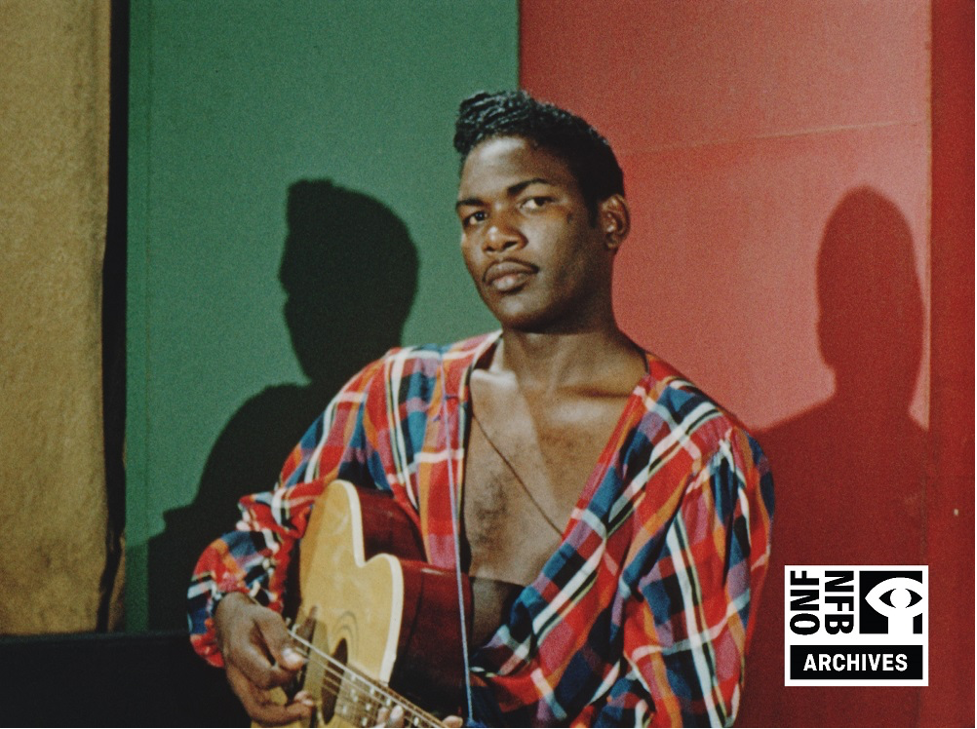
In preparation for the workshop, the NFB Archives team had specially digitized four reels of previously unseen Caribbean footage, including eye-popping Kodachrome outtakes from a 1959 film entitled The Bright Land (directed by Morten Parker). This visually lavish material features the geographical and cultural diversity of the short-lived West Indies Federation (1958–1962) and its 10 territories: Antigua and Barbuda, Barbados, Dominica, Grenada, Jamaica, Montserrat, Saint Kitts-Nevis-Anguilla, Saint Lucia, St. Vincent, and Trinidad and Tobago.
In 1958 the NFB camera crew was in Port of Spain when Princess Margaret of England inaugurated the federal legislature; they filmed the official ceremony and the unofficial celebrations, and they travelled the other islands, recording daily life, landscapes and cities in vivid detail. The finished film’s commentary may be problematic, but its stunning visuals convey the optimism and cultural richness of a special time and place.
“The Bright Land and its outtakes present a perfect case study of the complexity faced by audiovisual archivists,” says Lea. “Here we have a film about an important Caribbean event, made by Canadians—apparently with funding from British West Indian Airways—who spoke on behalf of different cultural groups and glossed over some very important and dark history, including slavery. In this case our records are incomplete, which makes identifying names and locations difficult after 65 years. But the essential thing is that we still have the film reels… they are truly precious, and it was a career highlight for me to watch and discuss them in person with some members of the communities represented.”
For those interested in viewing the raw, archival shots, they can be found at archives.nfb.ca, the NFB’s new footage platform. The Bright Land is available for free streaming at nfb.ca.